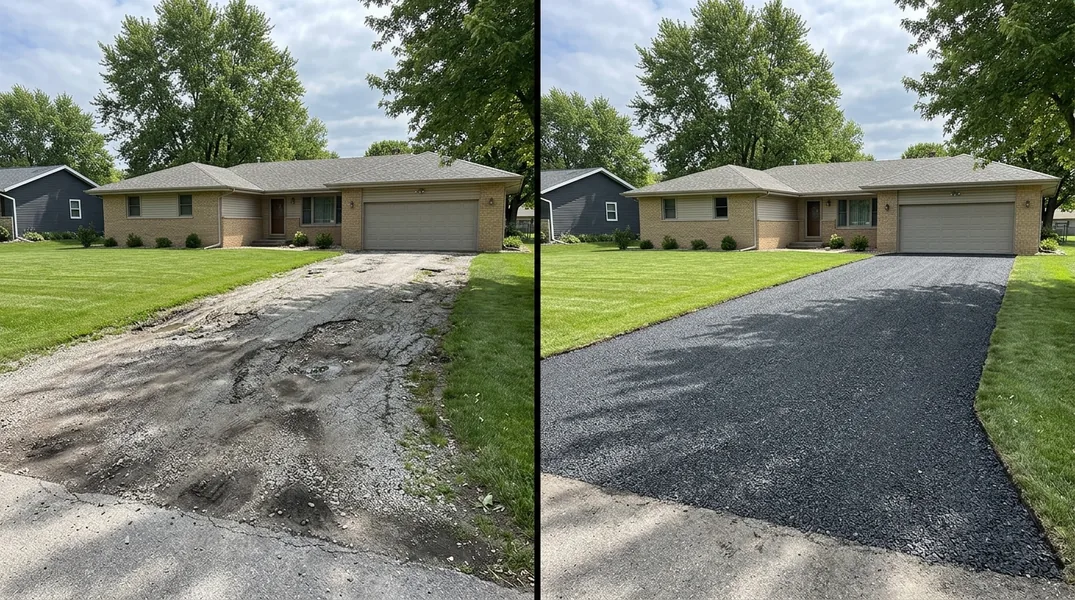
Understanding Decatur's Black Prairie Soil and Driveway Damage
If you live in Decatur, you've likely noticed that driveways around town don't all fail the same way. Some develop deep potholes, others heave and crack in winter, and some simply seem to last longer than they should. The common denominator behind many of these problems isn't just age or traffic. It's the soil beneath your driveway.
Decatur sits in the heart of Illinois' black prairie region, where the soil has unique characteristics that most homeowners never think about until their driveway starts failing. This dark, nutrient-rich soil is famous for making Illinois farmland incredibly productive, but it presents a specific challenge for asphalt installation. Black prairie soil has poor drainage, holds moisture for extended periods, and expands and contracts significantly with temperature changes. When you pour asphalt directly on inadequately prepared soil, or without a proper base layer, you're setting yourself up for expensive repairs down the road.
What Happens Without a Proper Base Layer
A proper base layer isn't just a construction detail that contractors add to inflate their quotes. It's the foundation that keeps your driveway stable for years. Without it, the asphalt sits directly on soil that's constantly moving. In spring, when snow melts and rain saturates the ground, that prairie soil becomes soft and unstable. In winter, water trapped beneath the asphalt freezes, expands, and pushes upward, creating the buckling and cracking you see on many Decatur driveways.
This cycle of expansion and contraction is called frost heave, and it's one of the most common reasons homeowners end up needing Driveway Repair within just a few years of installation. Without proper drainage and a compacted base (typically crushed stone or recycled asphalt), water migrates upward through the soil and gets trapped under the asphalt layer. Once frozen, that water creates tremendous pressure, literally lifting sections of your driveway. The result is an uneven, cracked surface that collects more water and accelerates further damage.
The Cost of Frost Heave Driveway Repair in Decatur
Frost heave driveway repair is one of the most frustrating problems homeowners face because it's often preventable. Once frost heave damage occurs, you're typically looking at one of two options: spend money on temporary fixes or invest in a more permanent solution. Temporary solutions like Pothole Repair & Asphalt Patching can extend your driveway's life by a year or two, but they don't address the underlying cause. The moisture and soil movement continue, and the problem returns.
The real question most homeowners ask is whether to repair or replace asphalt driveway. If your driveway is less than ten years old and shows signs of frost heave, patching might make sense as a temporary measure. However, if the damage is widespread or the driveway is older, Asphalt Resurfacing & Overlay or full replacement with a proper base layer is the smarter long-term investment. A new driveway with correct base preparation costs more upfront, but it eliminates the cycle of damage and repair that drains your budget year after year. To understand what your specific situation requires, contact Decatur Asphalt Paving at (217) 859-8789 for a free estimate.
Why Base Layer Quality Matters More Than Asphalt Thickness
Many homeowners think a thicker layer of asphalt is the key to durability. In reality, the base layer is far more important. A four-inch layer of asphalt over poor soil will fail faster than a three-inch layer over a properly prepared six-inch stone base. The base layer does three critical things: it provides structural support, it allows water to drain away from the asphalt, and it distributes vehicle loads evenly across the soil beneath.
In Decatur's black prairie environment, a proper base typically consists of compacted crushed limestone or recycled asphalt material, laid to a depth of four to six inches and compacted to at least 95% of maximum density. This layer allows water to percolate downward and away from the asphalt surface, preventing the moisture accumulation that leads to frost heave and pothole formation. Without this foundation, even premium asphalt installed by skilled contractors will eventually fail. When you're evaluating Asphalt Driveway Paving & Installation options, always ask contractors about their base layer specifications. A contractor who skips or minimizes base preparation is saving money at your expense.
Pothole Repair and Patching: Temporary Solutions for Ongoing Problems
If your driveway already shows signs of damage, Pothole Repair & Asphalt Patching can provide immediate relief. Potholes form when water gets trapped beneath the asphalt, freezes, thaws, and creates voids. As vehicles drive over these weak spots, the asphalt breaks apart and chunks fall away, creating the characteristic bowl-shaped hole. Patching these holes is important for safety and to prevent the damage from spreading, but it's crucial to understand that patching doesn't fix the underlying moisture problem.
Most pothole repairs involve cleaning out the damaged area, applying a tack coat, and filling it with hot mix asphalt. These patches typically last one to three years in Decatur's climate, especially if the base layer issues remain unaddressed. If you find yourself calling for pothole repairs every spring or summer, it's a signal that your driveway needs more comprehensive attention. At that point, investing in proper base preparation and Asphalt Resurfacing & Overlay becomes the more economical choice than continuing to patch the same areas repeatedly.
Planning Your Driveway Investment: When to Repair, Resurface, or Replace
Deciding whether to repair or replace asphalt driveway isn't always straightforward, but understanding your driveway's condition and age helps clarify the choice. A driveway that's less than five years old with isolated potholes or small cracks is a good candidate for patching. A driveway that's seven to twelve years old with moderate damage across several areas might benefit from resurfacing, which applies a new asphalt layer over the existing surface. A driveway older than fifteen years, or one showing signs of widespread frost heave, typically warrants full replacement with proper base preparation.
The key factor in any decision is whether the base layer is still sound. If previous installation skipped proper base preparation, replacement is your best option because resurfacing won't solve the underlying moisture and soil movement issues. When you're ready to move forward, Decatur Asphalt Paving can assess your specific situation and recommend the most cost-effective solution. Call (217) 859-8789 or visit our website to request a free estimate. We'll evaluate your driveway's current condition, discuss the soil and drainage factors specific to your property, and provide clear recommendations for achieving a durable, long-lasting result that accounts for Decatur's unique environmental conditions.
Looking for a professional asphalt paving contractor in Decatur? Decatur Asphalt Paving responds fast for all your asphalt paving needs.
Get a Free Quote